
Open Interpreter
Open Interpreter is an open-source AI coding agent that lets developers execute commands, edit files, and automate programming tasks using natural language.
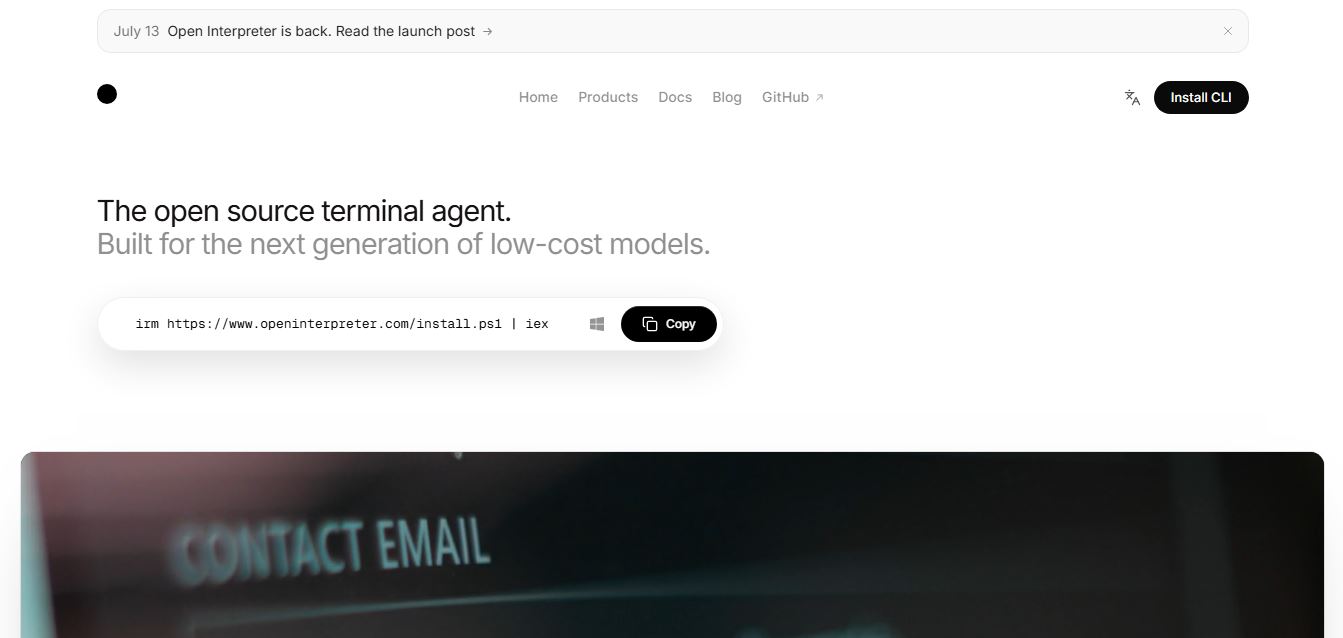
Useful details for evaluating Open Interpreter
Primary Category
Code Assistant
Pricing Model
Free
Related Topics
Low-code/No-code
Last Updated
Aug 4, 2026
What is Open Interpreter AI?
Open Interpreter is an AI-powered coding platform that allows developers to interact with their computers in plain language. It runs directly in the terminal, allowing you to change code, perform commands, manage files, automate small workflows, and accomplish development work without having to write each command yourself. In contrast to many other AI coding aids, Open Interpreter accepts a variety of AI providers, including OpenAI, Anthropic, DeepSeek, Qwen, and even local language models. It also includes built-in sandboxing for safer execution and remains provider-agnostic, making it a versatile option for software developers, DevOps engineers, AI researchers, and larger technical teams looking for quick coding automation.
Open Interpreter is an Apache 2.0-licensed open-source project supporting dozens of AI providers and multiple coding harnesses. Its GitHub repository has gained more than 67,000 stars and over 5,800 forks, demonstrating strong developer adoption. Recent benchmark testing showed DeepSeek V4 Flash solving 53 out of 89 Terminal-Bench tasks and Kimi-K2.5 solving 50 out of 89 tasks using Open Interpreter's model-specific harnesses, highlighting its strong coding performance and efficiency.
- Founder: Killian Lucas
- Launch: 2023 (Original Python project), redesigned terminal agent relaunched in July 2026
- Use Cases:
- AI coding assistance
- Software development
- Code editing
- Task automation
- Terminal automation
- Data analysis
- Browser automation
- Local AI workflows
- Technology:
- Rust
- Python
- Large Language Models
- Codex architecture
- Sandbox execution
- MCP support
- Target Users:
- Software developers
- DevOps engineers
- AI engineers
- Open-source contributors
- Technical teams
- Acquisition:
- No public acquisition has been announced.

Open Interpreter Key Features
Open Interpreter key features are
- Natural Language Terminal Control: Control your computer using plain English commands to execute terminal tasks, manage files, and automate workflows without manually typing complex commands.
- Multi-Model AI Support: Connect with leading AI models from OpenAI, Anthropic, DeepSeek, Qwen, Kimi, Ollama, LM Studio, OpenRouter, and other providers, giving you complete flexibility.
- Local AI Model Compatibility: Run Open Interpreter with locally hosted language models to improve privacy, reduce API costs, and maintain full control over sensitive data.
- Secure Sandbox Execution: Execute commands in isolated sandbox environments with permission controls, reducing risks when testing scripts or running AI-generated code.
- AI-Powered Code Editing: Create, modify, refactor, and debug code across multiple programming languages using natural language instructions directly from the terminal.
- Cross-Platform Support: Works seamlessly on Windows, macOS, and Linux, allowing developers to use the same AI-powered workflows across different operating systems.
- Project-Aware Conversations: Maintains context across coding sessions, enabling the AI to understand project structure and provide more accurate code suggestions and automation.
- File and Folder Management: Read, create, rename, organize, and edit files or entire project directories using simple conversational prompts.
- Workflow Automation: Automate repetitive development tasks such as project setup, dependency installation, testing, documentation generation, and deployment commands.
- Model Context Protocol (MCP) Support: Integrates with MCP servers to connect external tools, databases, APIs, and custom services for extended AI capabilities.
Open Interpreter Pricing
Open Interpreter offers various pricing plans
| Plan | Price | Details |
|---|---|---|
| Open Source | Free | Full access to the Open Interpreter software under the Apache 2.0 license. |
| Local AI Models | Free | Use with Ollama, LM Studio, or other supported local models without API charges. |
| OpenAI API | Pay as you go. | Usage-based pricing according to your selected OpenAI model. |
| Anthropic API | Pay as you go. | Costs depend on the Claude model and API usage. |
| DeepSeek API | Pay as you go. | Usage-based pricing set by DeepSeek. |
| OpenRouter | Pay as you go. | Access multiple AI models with provider-specific pricing. |
| Enterprise | Custom | Custom deployment, support, and enterprise solutions available upon request. |
Disclaimer: For the latest and most accurate pricing information, please visit the official Open Interpreter website.
Who is using the Open Interpreter?
A diverse range of users and organizations utilize Open Interpreter
- Software developers
- AI application developers
- DevOps professionals
- Machine learning engineers
- Open-source contributors
- Research organizations
- Startup engineering teams
- Technical educators
- Automation specialists
- Enterprise development teams
What are the Best Open Interpreter Alternatives?
Some open-interpretation alternatives are
- Claude Code
- OpenAI Codex
- Cursor AI
- GitHub Copilot
- Continue
- Aider
- Windsurf
- Cline
- Codeium
- Tabnine
Pros and Cons
Pros
- Completely open source
- Supports many AI providers
- Strong local model compatibility
- Built-in security sandbox
- Cross-platform support
- Active developer community
- Flexible workflow automation
- Commercial-friendly license
Cons
- Requires terminal knowledge
- Setup may challenge beginners
- Performance depends on the selected AI model
- Some advanced features require external APIs
Why Choose Open Interpreter?
Open Interpreter is an excellent choice for developers who want complete control over their AI coding workflow and don't want to be locked into a single AI provider.
Reasons to choose Open Interpreter:
- Free and open-source software
- Supports local and cloud AI models
- Built-in secure sandbox
- Compatible with multiple coding environments
- Works across Windows, macOS, and Linux
- Highly customizable workflows
- Excellent for AI-assisted programming
- Regular community-driven updates
Open Interpreter vs Competitors
The main difference between Open Interpreter, Cursor AI, GitHub Copilot, Claude Code, and OpenAI Codex is that Open Interpreter is completely open source, provider-agnostic, and supports local AI models with secure sandboxing. Cursor AI and GitHub Copilot focus mainly on IDE integration, while Claude Code and Codex are optimized for their respective ecosystems. Open Interpreter gives developers greater flexibility, customization, and model choice for AI-powered coding.
| Feature | Open Interpreter | Cursor AI | GitHub Copilot | Claude Code |
|---|---|---|---|---|
| Open Source | Yes | No | No | No |
| Local AI Support | Yes | Limited | No | No |
| Multi-Provider Support | Yes | Partial | No | Limited |
| Terminal Automation | Yes | Limited | No | Yes |
| Sandbox Security | Yes | No | No | Yes |
| Cross Platform | Yes | Yes | Yes | Yes |
| Commercial License | Apache 2.0 | Proprietary | Proprietary | Proprietary |
How do we rate Open Interpreter?
| Category | Rating (Out of 5) |
|---|---|
| AI Capabilities | 4.8 |
| Ease of Use | 4.3 |
| Features | 4.9 |
| Performance | 4.7 |
| Value for Money | 5.0 |
| Security | 4.8 |
| Customization | 5.0 |
| Community Support | 4.8 |
| Documentation | 4.6 |
| Overall Rating | 4.8 |
Open Interpreter Review
Open Interpreter is one of the most powerful open-source AI coding agents available today. Its support for multiple AI providers, local language models, secure sandboxing, and terminal-based automation makes it an excellent option for developers seeking flexibility. Unlike proprietary AI coding assistants, Open Interpreter gives users full control over their workflows while maintaining strong security features. Although beginners may experience a learning curve, experienced developers will appreciate its extensive customization, open-source ecosystem, and cost-effective deployment options.
Conclusion
Open Interpreter stands out as a powerful AI coding tool that combines open-source flexibility with enterprise-level functionality. It allows you to employ a number of AI providers, provides sandbox-style execution that feels safer, and assists developers in automating coding activities more smoothly. If you're considering cloud AI services or local language models, Open Interpreter adapts to how you work. Open Interpreter is still one of the best options for anyone seeking a customizable alternative to proprietary AI coding helpers.
People are also reading
FAQ
What is Open Interpreter?
Open Interpreter is an open-source AI coding agent that lets users control their computer and execute programming tasks using natural language.
Is Open Interpreter free?
Yes. It is free and open-source under the Apache 2.0 License.
Which AI models does Open Interpreter support?
It supports OpenAI, Anthropic, DeepSeek, Qwen, Kimi, Ollama, LM Studio, OpenRouter, and many other providers.
Can Open Interpreter run local AI models?
Yes. It supports locally hosted language models for private development.
Is Open Interpreter safe?
Yes. It includes built-in sandboxing and permission controls to improve execution safety.
User Reviews
No reviews yet for Open Interpreter.
Featured Tools
Featured AI tools from TechShark

Fashion Diffusion AI
Fashion Diffusion is an AI-powered fashion design platform that helps brands and designers create clothing designs, virtual try-ons, AI models, product photos, and marketing visuals faster and cost-effectively.
Paid
Veo 4
Veo 4 AI is an AI video creation platform that generates dramatic videos from text, images, audio, and video prompts using realistic motion and synchronized sound.
Paid
Happy Horse
HappyHorse AI is an AI-powered video generator that creates cinematic videos with synchronized audio from text, images, and prompts instantly.
Paid
Seedance 2
Seedance 2.0 is an AI-powered video generation platform that transforms text, images, audio, and video into cinematic, multi-shot content with advanced motion control, reference-based consistency, and synchronized sound production.
Freemium
Alternatives
Alternatives to Open Interpreter
The best Open Interpreter alternatives include Cursor AI, GitHub Copilot, Claude Code, OpenAI Codex, Continue, Aider, Windsurf, Cline, Codeium, and Tabnine. These AI coding assistants offer features such as intelligent code completion, automated debugging, terminal assistance, pair programming, and workflow automation. While most alternatives are proprietary, Open Interpreter remains unique because of its open-source architecture, local AI compatibility, provider-agnostic design, and secure sandboxing for advanced development workflows.
 4.6
4.6Emergent
Code Assistant
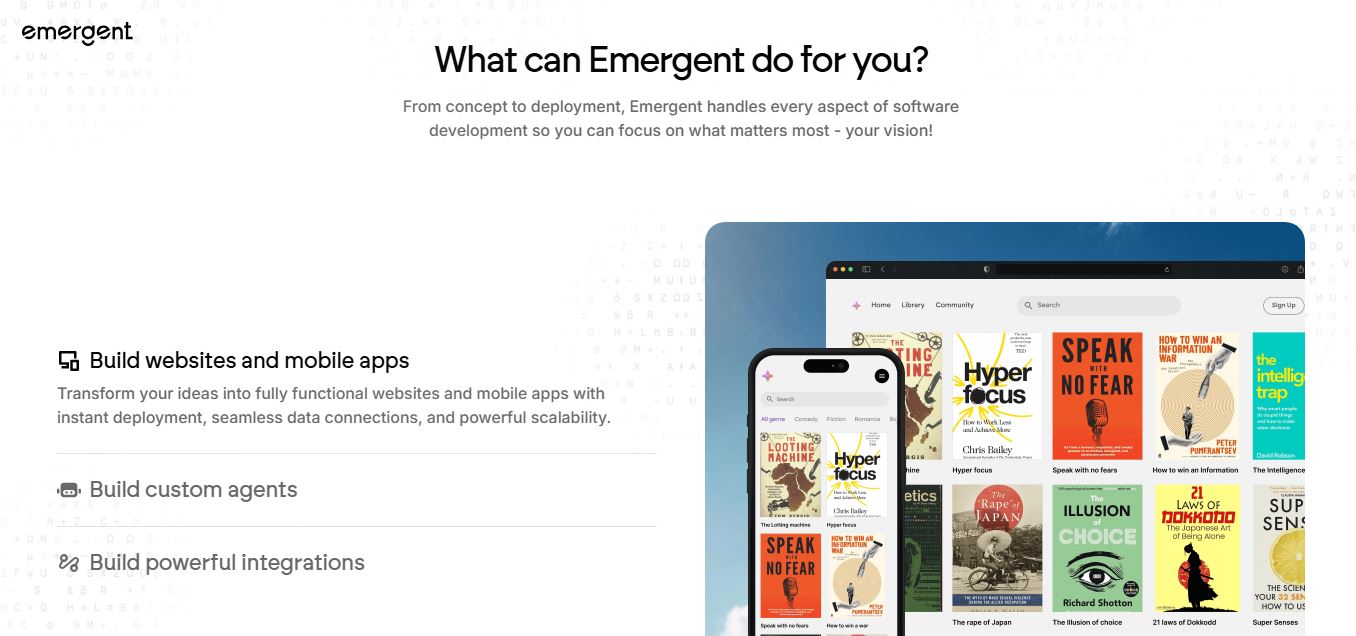
Emergent is an AI-powered app builder that transforms natural language prompts into production-ready web and mobile applications. It handles coding, testing, deployment, and integrations, enabling anyone to build software without coding.
 4.5
4.5Lovable
Low-code/No-code
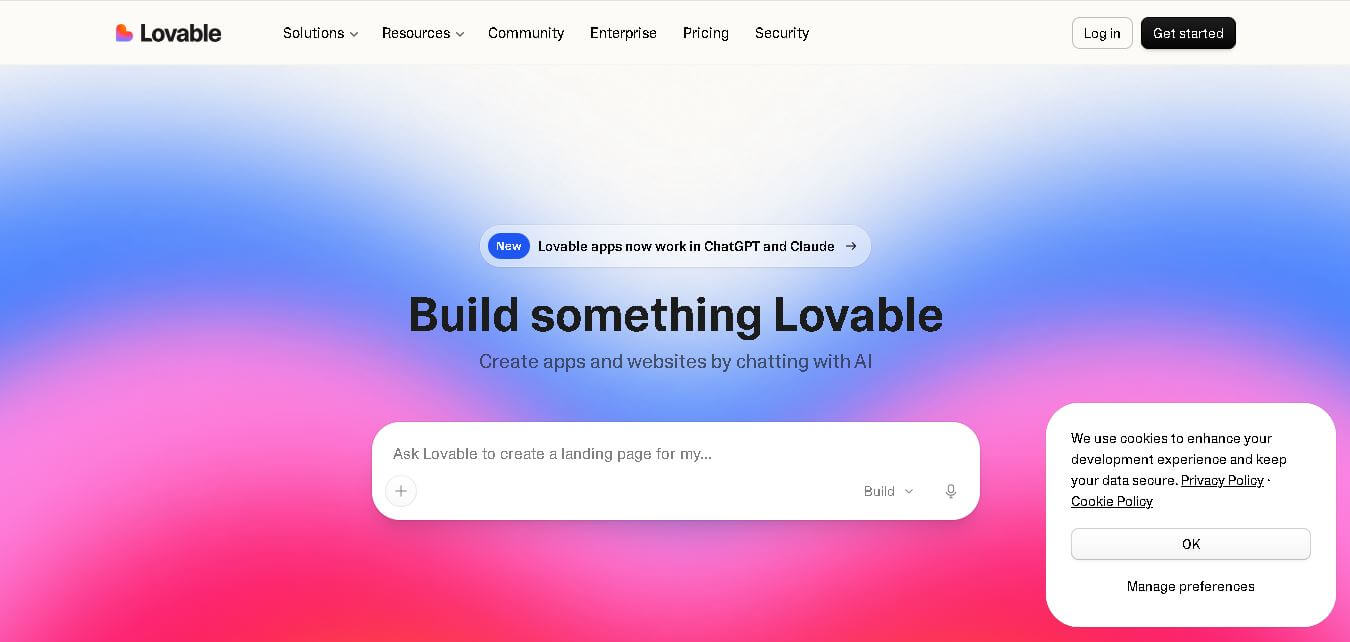
Lovable is an AI-powered app development platform that transforms natural language prompts into full-stack web applications with code, UI, database integration, authentication, and deployment capabilities for developers.
 4.8
4.8Bolt.new
Low-code/No-code
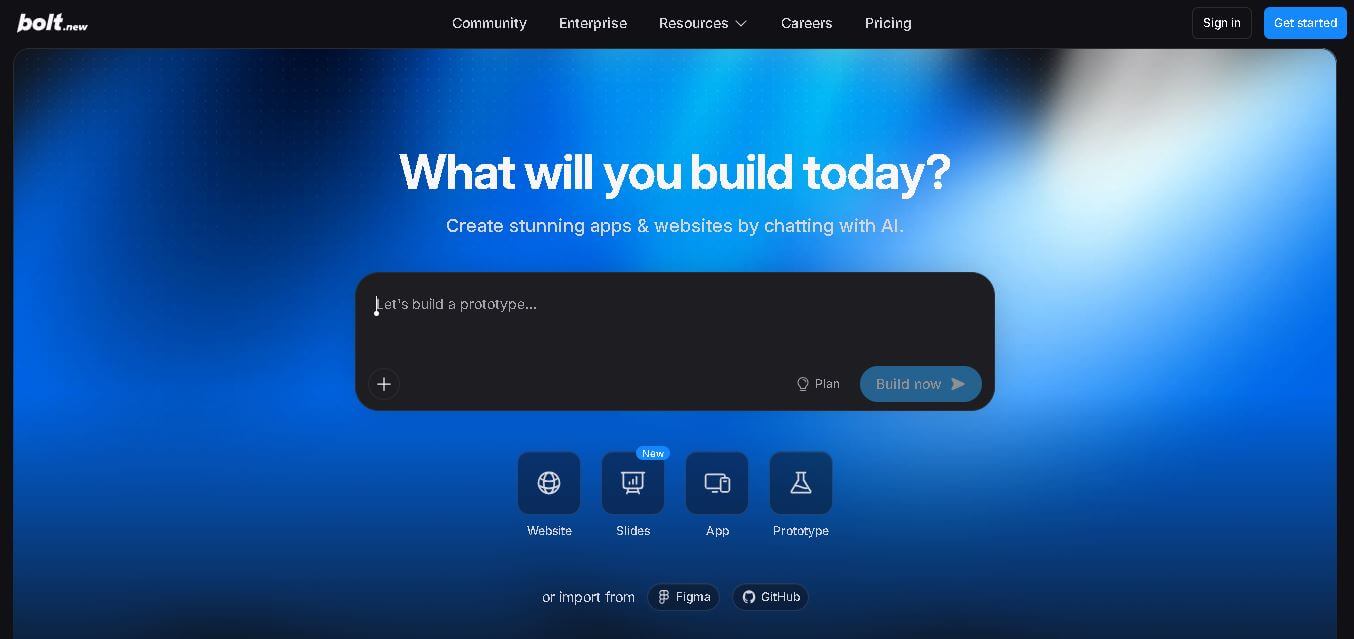
Bolt.new is an AI-powered full-stack development platform that transforms natural language prompts into production-ready web applications, enabling developers and non-developers to build, edit, and deploy software quickly.
 4.5
4.5Miniapps.ai
Low-code/No-code
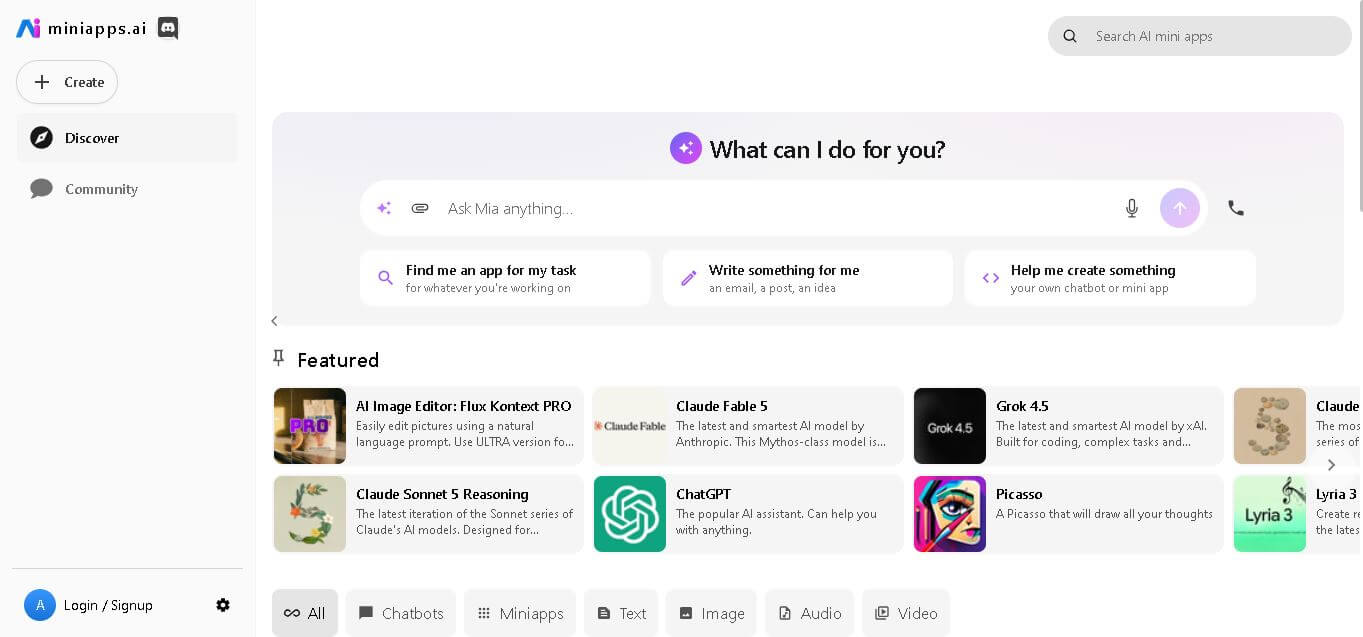
Miniapps.ai is an AI-powered no-code platform that helps users create, customize, and share AI mini applications, chatbots, and productivity tools quickly without programming knowledge.
 4.5
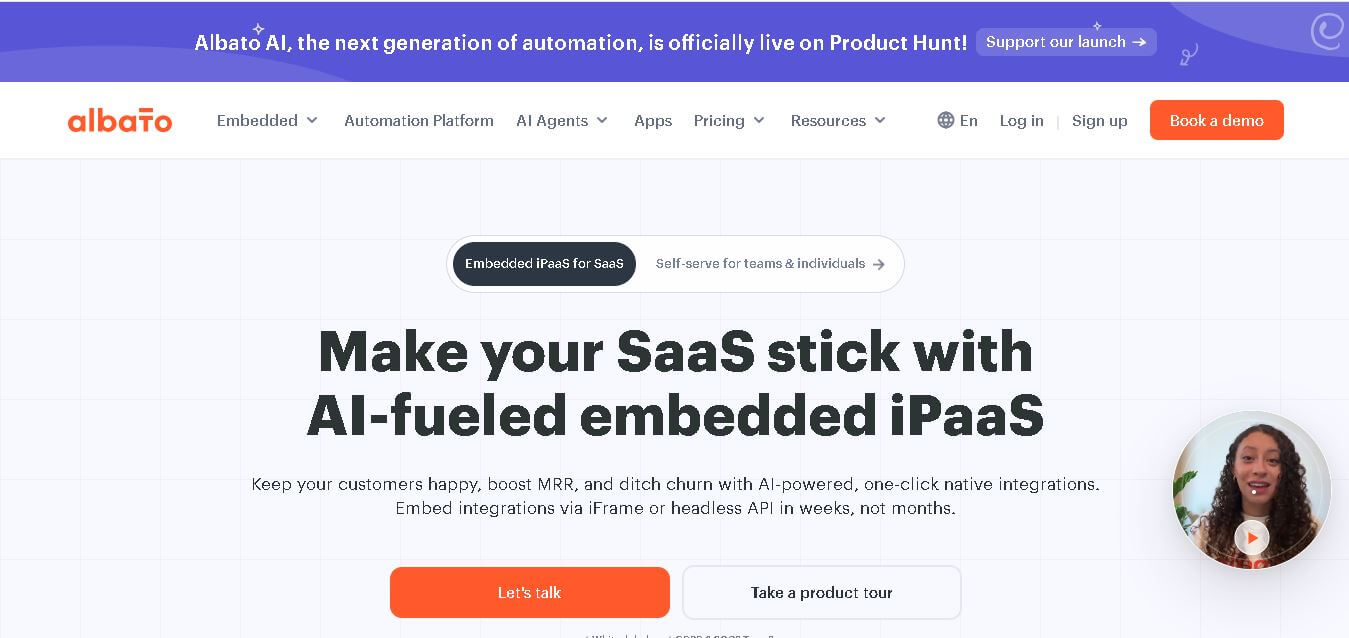
4.5Albato
Workflow
Albato is an AI-powered workflow automation platform that connects apps, automates repetitive tasks, synchronizes business data, and helps teams build no-code integrations to improve productivity and efficiency.
 4.3
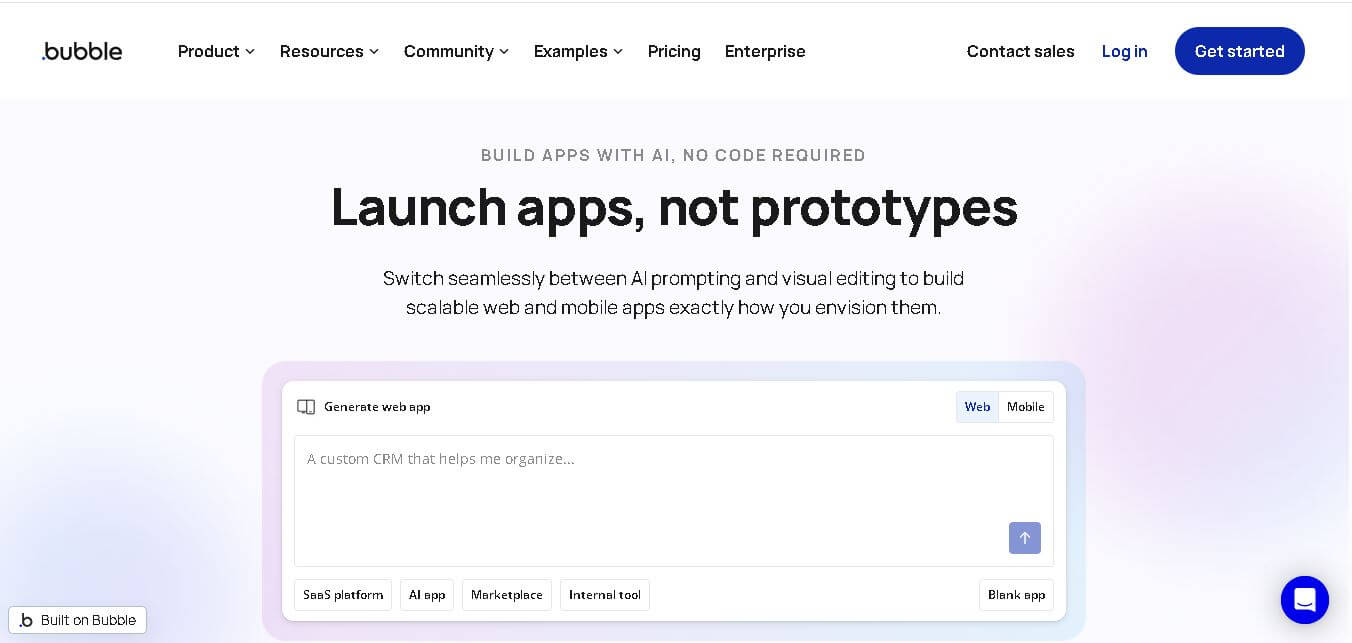
4.3Bubble
Low-code/No-code
Bubble.io is an AI-powered no-code application development platform that helps users build, launch, and scale web applications visually without coding, using automation, AI integrations, and customizable workflows.
 4.5
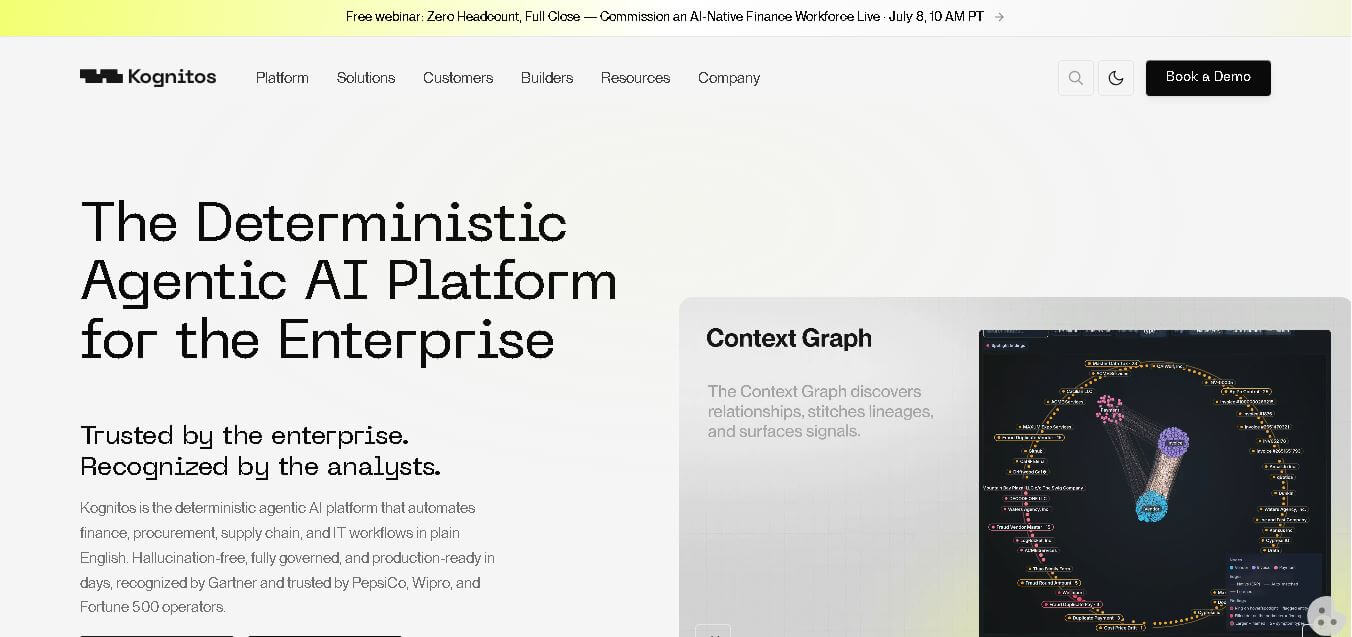
4.5Kognitos
Low-code/No-code
Kognitos is an AI-powered enterprise automation platform that enables businesses to automate workflows using natural language, improving productivity, operational efficiency, governance, and digital transformation without traditional coding.
 4.5
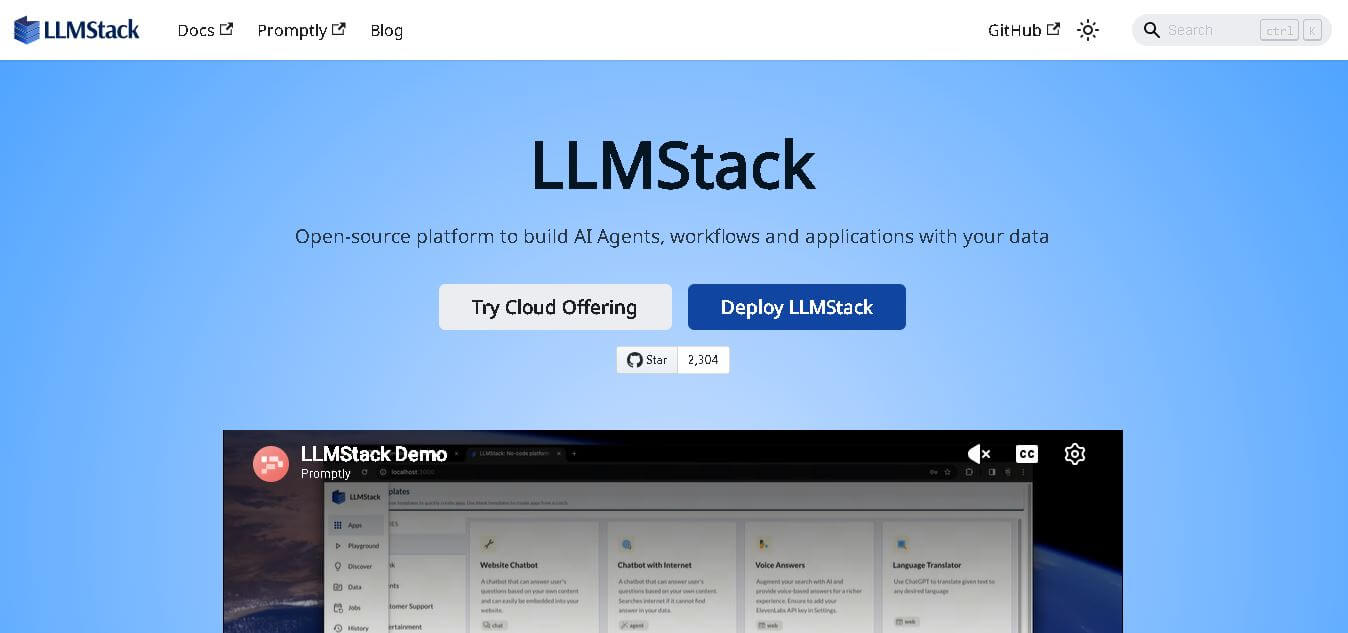
4.5LLMStack
Low-code/No-code
LLMStack is an AI-powered no-code platform that helps users build AI agents, chatbots, and generative AI applications using multiple language models, custom data sources, and workflow automation.
 4.4
4.4Nominal
Finance
Nominal is an AI-powered accounting automation platform that helps finance teams automate reconciliation, consolidation, reporting, and month-end close workflows using intelligent AI agents.